How does a 40,000-hour trio control a Rust server?
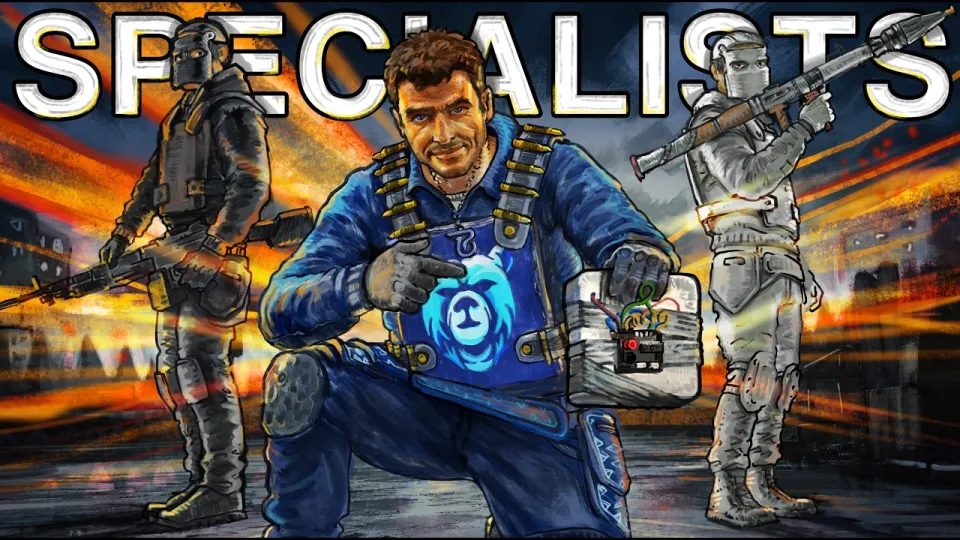
Video: How a 40,000-Hour Trio CONTROLS a SERVER - Rust
Need articles like this for your video? They help promote it on YouTube and Google — order them in the Telegram bot @sat_sit_bot. Articles with your video embedded are written and posted by the bot itself — on popular topical sites (no ads). Try it free: 50 articles on us.
· based on the channel Blooprint
Key takeaways
- Blooprint, Disfigure and Nine bring roughly 40,000 combined hours of Rust experience to one trio.
- The wipe runs on a server with more than 500 players online.
- The trio moves from a quiet start to raiding the competition within the same wipe.
- Online raids and base defense become the main test of who keeps control.
- The video is published on the Blooprint channel and features Disfigure and Nine.
A 40,000-hour trio controls a Rust server by combining deep game knowledge with fast decision-making, coordinated raids and the willingness to defend online. In the Blooprint video, Blooprint, Disfigure and Nine turn a low-ambition wipe on a 500+ population server into a full takeover, raiding competing groups before the wipe is over. You can watch the sessions live and catch the next wipe on Blooprint's Twitch channel.
What 40,000 hours actually buys a Rust trio
Forty thousand hours is not a single trick; it is a stack of small advantages that compound over a wipe. A trio with that much experience does not need to gamble on every fight, because each player already knows the map flow, the common base layouts and the timing of a raid. Blooprint, Disfigure and Nine have spent years in Rust, and the video shows the result: fewer wasted materials, cleaner calls and faster recovery after a lost fight.
The number matters less as a brag and more as a description of routine. Experienced players know when to farm, when to rotate, when to push a fight and when to let an online raid come to them. That routine is what lets a small group compete on a server where most opponents have more bodies.
How a trio takes over a 500+ pop server
Controlling a high-population Rust server starts with choosing fights that grow the trio's advantage instead of spending it. On a server with more than 500 players, the map is crowded, resources are contested and every raid can attract third parties. The trio's edge is speed: hitting a target, taking the loot and leaving before a counter-raid forms.
A practical sequence looks like this:
- Establish a base that can survive an online raid, not just a offline one.
- Farm enough explosives to raid consistently without emptying the group's own stores.
- Scout targets and confirm who is online before committing to a raid.
- Move loot fast and split it so one lost fight does not end the wipe.
- Keep pressure on competing groups so they spend time defending instead of farming.
Blooprint's description of the wipe is direct: the group started without major ambitions, progressed quickly and found itself dominating the server before raiding all of the competition. That is the pattern of a trio takeover, where momentum matters more than raw numbers.
Raiding the competition and surviving the online answer
Raiding is where server control is actually decided, because an online raid forces both sides to play under pressure. A trio can farm and build quietly for hours, but the moment a raid goes online, the defenders can counter, flank and call allies. The Blooprint video leans into that tension: the trio raids the competition, and the competition answers.
Viewers who do not play Rust often react to the raids as pure entertainment, but the mechanics behind them are simple. Explosive counts, door paths and loot priority decide whether a raid pays for itself. A group that raids without scouting ends up spending more sulfur than it gains. A group that scouts first can pick targets where the defenders are offline, distracted or already fighting someone else.
The same logic applies on defense. When the trio gets raided online, the goal is not to win every gunfight but to make the raid expensive. That means using the base layout, holding chokepoints and forcing attackers to spend more explosives than the loot is worth. The video's reputation as an online-raid story comes from that back-and-forth.
What viewers question about high-hour trios
Comments on the video show a recurring doubt: when a group suddenly starts winning fights it previously lost, viewers wonder whether something changed beyond skill. That suspicion is common in Rust, where a single lucky fight or a new teammate can shift a wipe. The fair way to judge a trio is over a full wipe, not one engagement.
Another common question is whether a trio can really hold a server against larger groups. The answer is yes, but not by fighting everyone at once. A trio controls a server by choosing when and where to fight, by raiding groups that are already weakened and by avoiding wars on two fronts. The 40,000-hour label describes the experience that makes those choices fast.
The video also draws viewers who have never played Rust. They follow the story through the raids and the base builds, and many say the content works even without game knowledge. That is a useful reminder that server control is a narrative as much as a mechanical feat: the audience remembers the online defense and the counter-raid, not the farm run.
Useful links
- Blooprint on Twitch — live Rust sessions and wipe streams.
- Blooprint on Kick — alternative live channel.
- Blooprint on TikTok — short clips and highlights.
- Blooprint on Twitter — updates and announcements.
- Blooprint Discord — community and group-finding.
Final thoughts
A 40,000-hour trio controls a Rust server through preparation, scouting and the discipline to raid only when the odds are in its favor. Blooprint, Disfigure and Nine show that a small group can dominate a 500+ population wipe without outnumbering anyone, simply by moving faster and choosing better fights. The online raids are the visible part, but the real advantage is the routine built over thousands of hours. If you want to see the next wipe live, follow Blooprint on Twitch and watch the trio build, raid and defend in real time. This breakdown is based on the Blooprint channel video and the discussion around it.
Source: How a 40,000-Hour Trio CONTROLS a SERVER - Rust · Markdown version
Questions & answers
How can three players control a Rust server with over 500 population?
They control it by choosing fights instead of taking every one. The trio raids weakened groups, scouts targets before spending explosives and avoids fighting on multiple fronts at once. Speed and coordination let three experienced players outplay larger but less organized groups.
What does 40,000 hours mean in Rust?
It is a combined experience figure for the trio, not a single player's playtime. That many hours translates into map knowledge, base layout familiarity and fast decision-making during raids and defenses. The number is a shorthand for routine rather than a guarantee of winning every fight.
Why do viewers suspect high-hour players of cheating?
Rust has a long history of cheating controversies, so sudden improvements in aim or awareness raise questions. However, a single strong fight is not proof, and experienced players can look suspicious when they predict rotations or hold angles. Judging a group over a full wipe is fairer than judging one engagement.
Is the Blooprint video worth watching if I have never played Rust?
Yes. The video is built as a story about a wipe, with raids, defenses and group dynamics that do not require game knowledge. Many viewers follow Blooprint's Rust content without playing the game, treating each wipe as a self-contained narrative.